
India’s Fitness Market Set to Double by 2030
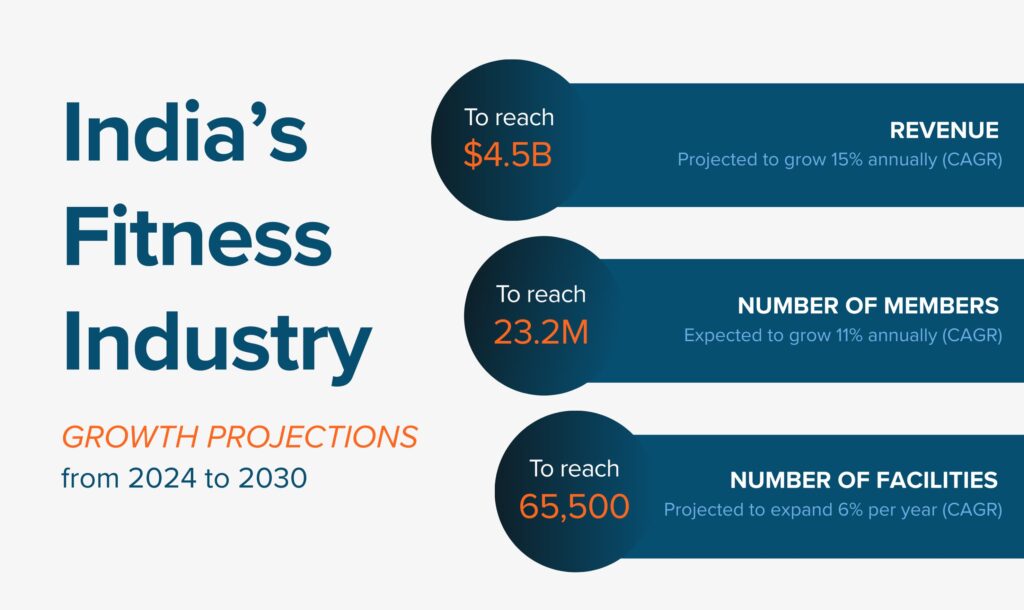
India’s fitness economy is emerging as one of the world’s fastest-growing markets, with revenue expected to more than double from INR16,200 crore (US$1.9 billion) in 2024 to INR37,700 crore (US$4.5 billion) by 2030.
That represents a robust 15% compound annual growth rate, according to the new India Fitness Market Report 2025 produced by Deloitte India in collaboration with the Health & Fitness Association (HFA).
The full report is available as a free download from the Health & Fitness Association.
Key Findings
- Untapped opportunity: Of India’s 956 million people aged 18–62, just 15% of those who are physically active participate in paid fitness activities.
- Growth by segment: Value gyms dominate today, contributing 78% of memberships and 80% of facilities. However, boutique studios are the fastest-growing segment, with nearly 19% annual growth expected through 2030.
- Market concentration: The top 10 cities—including Mumbai, Delhi NCR and Bengaluru—account for 56% of industry revenue but only 31% of facilities.
India’s fitness market is transforming rapidly, fueled by rising health awareness, technological innovation, and changing consumer attitudes. Increasing disposable incomes, urbanization, favorable demography, and the proliferation of fitness culture contribute to the momentum that’s captured by the report, which highlights both the enormous potential and the challenges ahead.
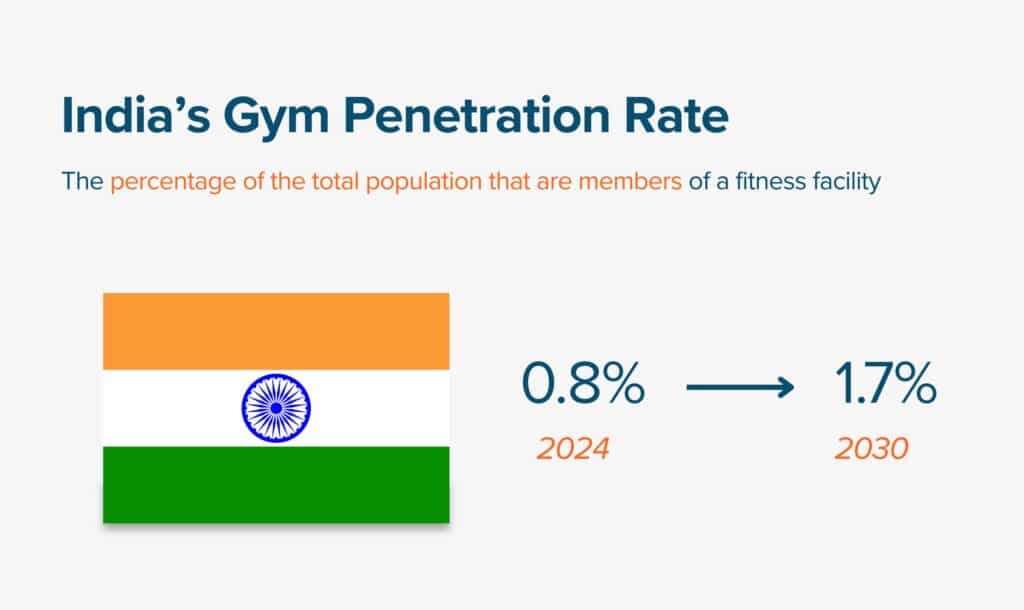
India currently counts about 12.3 million fitness facility members, but with membership penetration at just 0.8% of the adult population, the market remains largely untapped. By 2030, memberships are projected to rise to 23.3 million, lifting penetration above 1.7%.
“While the market is poised to more than double by 2030, what stands out is the untapped opportunity, as nearly 820 million Indians between 18 and 62 years of age remain completely inactive,” said Praveen Govindu, Partner, Deloitte India. “The next wave of growth will not only be about opening more facilities, but about designing inclusive, affordable and community-driven models that can reach smaller towns, women and lower-income households.”
Liz Clark, president and CEO of HFA, added: “India represents one of the most exciting growth opportunities in the global fitness industry today. With continued innovation, strategic investment, and supportive public policy, the country’s fitness sector can deliver meaningful returns financially and improved health outcomes for millions.”
A Broader Economic Movement
The report notes that fitness in India is evolving beyond gym-based workouts into a lifestyle economy that fuels allied sectors such as real estate, activewear, nutrition, wellness tourism, and digital platforms.
With rising disposable incomes and a health-conscious youth population, the industry is expected to play a central role in India’s wellness journey as the world’s most populous country advances toward its US$5 trillion economic goal.
“India represents one of the most exciting growth opportunities in the global fitness industry today. With continued innovation, strategic investment, and supportive public policy, the country’s fitness sector can deliver meaningful returns financially and improved health outcomes for millions.”
Liz Clark, President and CEO, HFA
How the Data Was Collected
The India Fitness Market Report 2025 was produced by Deloitte India in collaboration with the Health & Fitness Association, drawing on both primary and secondary research to provide a comprehensive view of the sector. The analysis was limited to commercial fitness facilities, excluding free public gyms, hotel facilities, and corporate wellness centers, to ensure consistency in market sizing.
Primary data collection combined several approaches, including web scraping of facilities across India, consumer and channel surveys, and interviews with owners, trainers, and managers to capture on-the-ground business dynamics.
Secondary data collection included analysis of industry reports, government databases, and market research publications to supplement and validate primary findings.
The full report is available as a free download from the Health & Fitness Association.