Smart Scaling: Navigating the Growing Pains of Building a Chain

Your dream may be expanding your footprint, but the reality requires building infrastructure, tapping the right leadership, and much more.

Expanding from a single club into a thriving chain is five or more locations is fraught with challenges that can test the resolve of even the most passionate founders.

The elements that forged the initial success—that hands-on approach, a tight-knit community, and nimble decision-making—can paradoxically become liabilities during expansion. Often, founders who are expanding their business find themselves overwhelmed by a diluted brand, the immense financial pressure of growth, and the daunting task of finding staff who share their original vision.

Without a clear, repeatable model, inconsistencies creep in, fracturing the member experience and extinguishing the unique spark that once defined your brand.

1 Open

Navigating a growth phase demands a pivotal shift in mindset.

Making a Mindset Shift

Successfully navigating this challenging growth phase demands a pivotal shift in mindset—from excelling as a club operator to emerging as a visionary leader of a scalable enterprise.

This evolution involves building a robust infrastructure, systemizing the brand’s “secret sauce,” empowering a new layer of leadership to carry the torch forward, and more.

So, how can owners learn to overcome the hurdles of expansion and build a fitness empire that is both profitable and true to its soul?

To find out, HFB spoke with three successful industry leaders with an enviable track record of expanding their footprint while maintaining the quality and essence of their brand: Gale T. Landers, founder and CEO of Fitness Formula Clubs (FFC), Rodney Steven, founder of Genesis Health Clubs, and Colin Grant, co-founder of the PURE Group.

Stay True to Core Values

Landers built FFC into a 10-location Chicago-based chain over the past four decades on a foundation of core values.

“From day one, FFC was built on five core values: safety, friendliness, superior service, improvement, and integrity,” he states. “We go to great lengths to ensure every FFC location feels like a natural extension of the original: personal, community-driven, and deeply committed to helping people live healthier lives.”

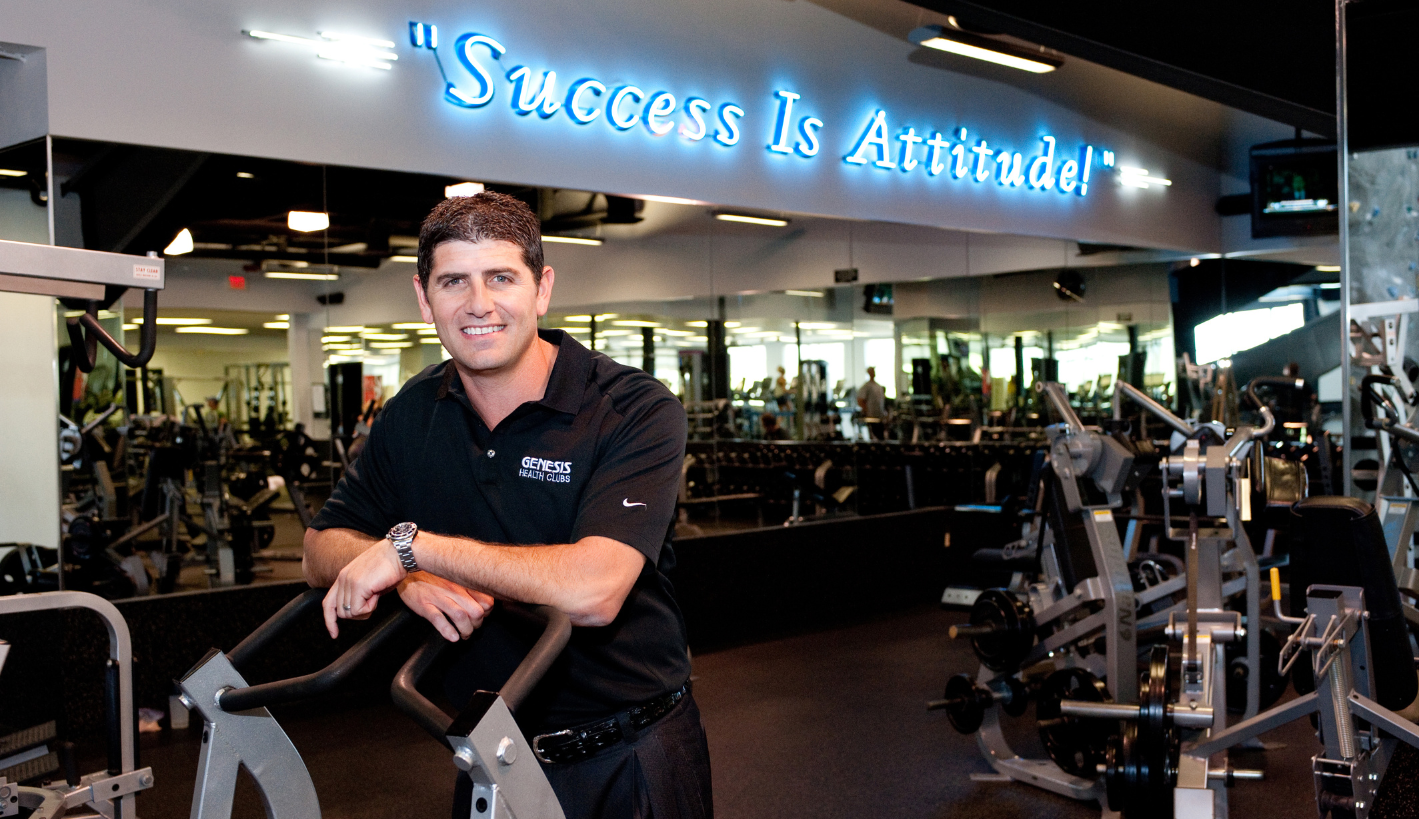
Steven owns 77 clubs in 13 states, including Kansas, Missouri, New Jersey, and New York. The Genesis culture is centered on a simple, powerful idea: From day one, it’s been about people.

“In fact, that became one of our strongest core values: Make Me Feel Important, or MMFI,” Steven says. “A brand is more than a logo; it’s how you make people feel when they walk through the door.”

At Hong Kong-headquartered PURE Group, which operates 37 PURE Yoga, PURE Fitness, and Re:set by PURE studios across Asia, founder Colin Grant embedded his vision of accessibility and community from the start.

“We wanted to break down barriers and build a social space where every- one felt they belonged,” Grant explains. This ethos is maintained through what he calls a flexible framework.

“The core stays true: authenticity, quality, and the PURE values. But we adapt to each neighborhood,” he adds.

To ensure this consistency, operators must define and document their “secret sauce.”

For FFC, this meant systemizing financial discipline, quantifiable service standards, staff training, and fanatical attention to operational excellence. At Genesis, it was about creating clear playbooks for sales, service, and programs to ensure every member gets the same welcoming feeling. For PURE, it involved a concerted strategy to build community and inclusion, developing an employee training system to instill leadership skills, and creating centralized systems to better manage expansion as the brand grew.


Mc Carthy Landers

Gale Landers (right) is pictured with John McCarthy, the first executive director of the International Health, Racquet & Sportsclub Association (IHRSA).

Building the Engine: Operations and Centralized Systems

Agile, on-the-fly decision-making may work for a single club, but it can create chaos across many. Growth necessitates a robust infrastructure built on centralized systems for billing, member management (CRM), and marketing.

“Once we were running multiple clubs, we immediately realized we needed robust, centralized systems,” Grant says. “These give us consistency and help deliver the level of experience members expect. They’ve also let us scale sustainably.”

Landers says, “Our centralized systems started in part with location number two of our current 10 today.”

His vision was a “hub-and-spoke” model that created operational efficiencies and economies of scale.

Centralization freed the staff to focus on member engagement and gave leadership better tools to guide the business, he says.

Steven shares a similar experience.

"After club two, we wrote our own software and have been programming ever since," he says. "Implementing a unified CRM and centralized marketing freed up club staff from administrative tasks so they could focus on creating energy in the club."

These systems can be key to overcoming the operational inefficiencies that plague expansion. One of the biggest early challenges is inconsistency, where each club begins doing things its own way.

"We had to set clear standards and hold every club accountable," Steven says.

“Our biggest competitor isn't the facility down the street; our biggest competitor is mediocrity.”

Gale Landers

Words of Wisdom

When asked for their single most valuable piece of advice, each leader offered insights that were distinct yet complementary:

Rodney Steven: “Refine your systems, assemble a trustworthy team, and establish a self-sustaining culture.”

Gale Landers: "Find two mentors: a local business mentor and one from afar from whom you can learn buckets through their proven business research."

Colin Grant: "Be authentic and clear on what makes you and your brand unique. Know what must stay consistent, and what can flex to fit the local community. And never compromise on your people—they’re everything."

How FFC Mastered the Regional Chain

Making the leap from one successful location to a multi-unit operation often involves struggles with brand dilution, operational inconsistencies, and a loss of the original club’s unique culture. Fitness Formula Clubs (FFC) Founder and CEO Gale Landers provides a powerful blueprint for how to navigate this expansion successfully, having built a thriving mini-chain in one of the nation’s most competitive markets.

At the request of Health & Fitness Business and with permission from Landers, Virtuoso CEO BJ Kito used data from the consultancy’s proprietary Krakin platform to evaluate FFC’s performance. The assessment revealed that FFC’s success stems from a clear, disciplined strategy that tackles common growth challenges head-on. Here are a few ways Landers and his team successfully scaled the brand.

They repositioned the brand: According to Kito, FFC’s foundation is a deliberate move away from being just a “gym.” Instead, they are classified as an “integrated health and wellness center,” a holistic model that combines core fitness with personal care, physical therapy, and nutritional support.

“This strategic positioning immediately differentiates them and expands their revenue streams beyond simple membership dues,” notes Kito.

They leaned into local advantages: A key to FFC’s triumph is its embrace of a “hyper-local premium” identity. While competitors like Equinox and Life Time focus on a national luxury brand, FFC has turned its geographic concentration in Chicago into a core strength, cultivating a strong local identity and community-focused feel.

This strategy creates a powerful “defensive moat” against larger national brands and fosters deep member loyalty. Market perception data confirms this success, with customers viewing FFC as the “gold standard for a neighborhood club in Chicago,” striking a perfect balance between high-end amenities and a welcoming, unpretentious atmosphere.

They developed a scalable infrastructure: “To avoid the operational chaos of expansion, FFC built a scalable infrastructure,” Kito says. “For example, the McKinsey 7-S framework analysis shows a structure with a corporate headquarters overseeing individual club managers, which allows for standardized quality while empowering local community-building.

“This is supported by integrated systems for member management and billing. Their growth has not been haphazard but has followed a clear plan: first, penetrating their existing market and developing new products like wellness services, and then leveraging that strong brand equity to expand into new, underserved affluent neighborhoods and suburbs.”

By systematizing their “secret sauce” of integrated wellness within a strong community framework, FFC has not only survived but is projected to grow its market share, according to Kito. Their journey demonstrates that successful expansion requires shifting from simply operating a club to strategically building a scalable, consistent, and deeply understood brand.

2 Rodney Steven

Rodney Steven

People Power Growth

You can’t scale a business alone. The most critical component of a successful expansion is building a strong second layer of management and empowering them to lead. This means identifying and developing leaders who don’t just understand your vision but live it.

Genesis’ philosophy centers on accountability and ownership.

“We look for leaders who share our values and understand that success or failure starts with them,” Steven says. “Our club managers are the ‘mayors’ of their clubs. They set the tone, motivate their teams, and create a culture where everyone wants to give their best every day.”

For Landers, “identifying and developing the right leadership team starts with recognizing people who believe in our mission and live our values.”

It’s an approach that works. Many of FFC’s senior leaders have been with the company for over 15 to 20 years—a testament to its strong culture of internal promotion and commitment to providing high-performing team members with clear pathways to leadership.

When hiring, these leaders also look for innate qualities that can’t easily be taught. “Skills can be learned, but caring and drive can’t,” Steven asserts. “We want people who take ownership, avoid blaming others, and lead by example.”

For front-line staff, Landers looks for personality, hospitality, and passion, he says.

PURE Group employs a concise hiring and development framework called PURE PATH (Passion, positive Attitude, Teamwork, and Honesty). “It doesn’t matter if you’re a front-desk team member, a yoga teacher, or a club ops manager—those qualities are universal,” Grant says.

For Landers, a key lesson was in leadership.

“Learning to discern between staff who find a workload to be ‘doable hard’ versus ‘destructively hard’ was a turning point that accelerated the fly-wheel of our business,” he says.

The journey of expansion is a powerful teacher, Grant says, and one of the biggest potential mistakes is compromising on personnel.

“Any time we didn’t have the right people in place, we paid for it,” he admits. “You can’t cut corners on people. The wrong team creates problems that take twice as long to fix.”

“A member once told me, 'A 45-pound plate weighs the same everywhere. I come here because of the people.'”

Rodney Steven

Financial Discipline Fuels Sustainable Growth

Rapid expansion exerts immense financial strain. Scaling requires a shift to more disciplined financial planning, budgeting, and forecasting to manage increased complexities like payroll, maintenance, and marketing across multiple sites.

Before you even consider expanding, you must be growth-ready.

Steven offers a simple but effective litmus test: “If your first club’s cash flow is twice as much as you need it to be, you’re on the way. Ensure your first club can operate independently before opening another. In addition, if opening a new location means lowering standards or pulling focus from existing clubs, we won’t do it.”

Landers, who has a background in accounting, emphasizes a long-term, debt-averse view. “Every eight to 10 years, history has shown that a major national economic or geopolitical mess occurs,” he says. “By avoiding over-leveraging and preserving a strong balance sheet, FFC can invest strategically and grow sustainably.”

As a sole owner, Landers says he has no outside pressure to grow for growth’s sake. “We have grown when we see strategic opportunity, and we never cut corners or compromise on our standards,” he says.

4 Grant

Colin Grant

The Ultimate Goal: A Consistent, High-Quality Member Experience

Every system, process, and leadership decision must ultimately serve one purpose: creating a consistent, high-quality member experience across every location. This is what turns a collection of gyms into a cohesive, go-to brand.

Landers’ hub-and-spoke model is also designed around the member.

By placing clubs near major transit lines, FFC creates a convenient network that encourages cross-club usage. But he knows that convenience isn’t enough.

“Our biggest competitor isn’t the facility down the street; our biggest competitor is mediocrity,” Landers says.

Steven says: “A member once told me, ‘A 45-pound plate weighs the same everywhere. I come here because of the people.’ That’s a foundational insight in capturing the Genesis experience, one focused on making every member feel seen and supported.”

To replicate the community feel across locations, Genesis intentionally  designs social spaces like smoothie bars and lounges to encourage connection.

At PURE, that aspect arises from empowering the staff.

“A tight-knit community doesn’t just happen; it’s built by people,” Grant says. “The real magic is giving our instructors and club teams the freedom to create that local energy.”

“You can’t cut corners on people. The wrong team creates problems that take twice as long to fix.”

Colin Grant

Be Patient and Learn From Others

Building a fitness mini-empire is a marathon, not a sprint. It demands a transformation in mindset, a deep commitment to preserving the brand’s soul through scalable systems, and an unwavering focus on empowering the right people.

By learning from the triumphs and trials of those who have paved the way, today’s club owners can navigate the growing pains to build a business that is not only larger but also stronger and more resilient.

Jon Feld

Jon Feld is a contributor to healthandfitness.org.